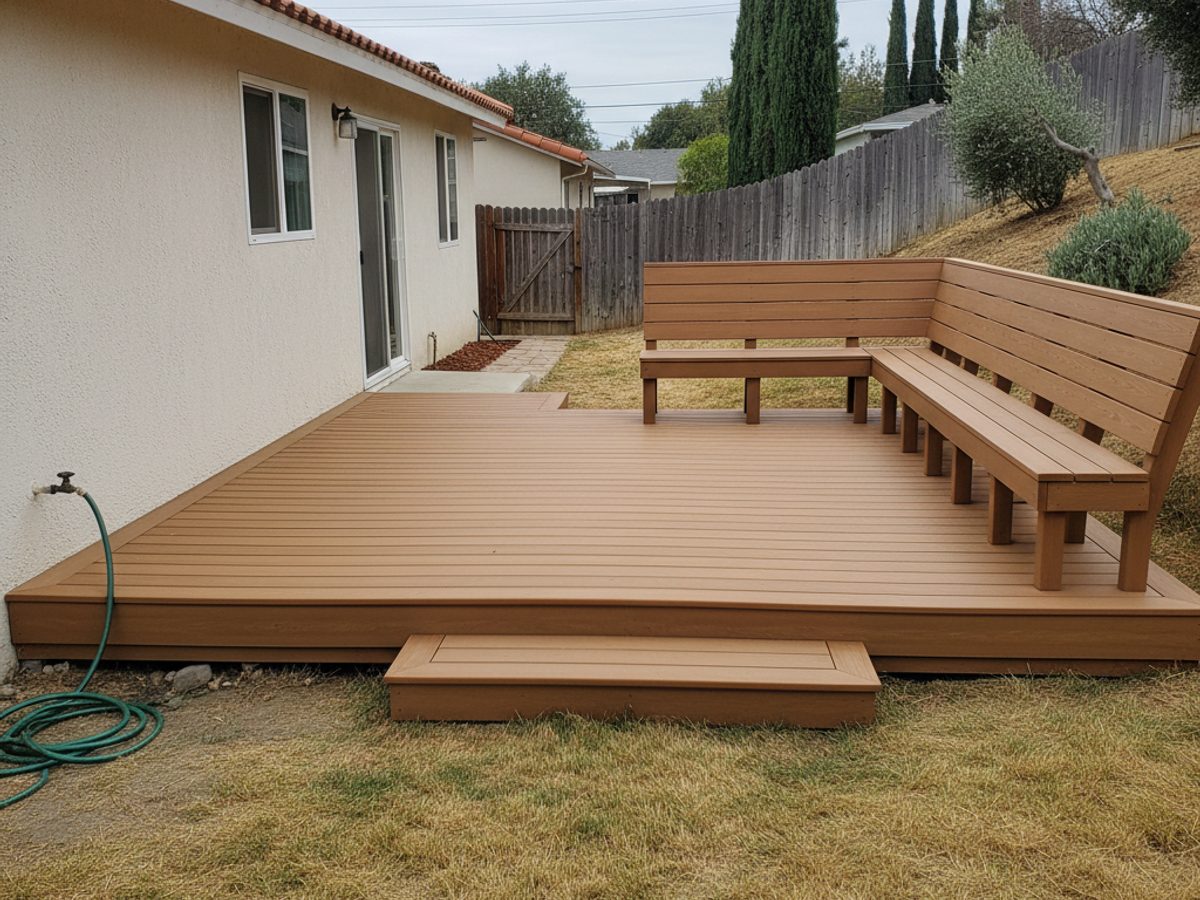
Madera gets a lot of deck builders who learned the trade on a roof crew or a fence crew and picked up decking because the margins looked good. Some of them are fine. Some of them will build you something that looks right for two summers and then starts to move. The hard part as a homeowner is that you can't tell the difference by looking at a finished deck in a photo. You have to know what questions to ask before the first board goes down.
Start with the ground, because Madera's soil is not forgiving
A lot of this county sits on clay and hardpan, especially out toward Madera Ranchos, Parksdale, and Bonadelle Ranchos where lots run bigger and the soil hasn't been amended by decades of landscaping. That hardpan layer can sit anywhere from 12 to 30 inches down. It's dense enough that a hand auger bounces off it, and a footing that stops short of solid bearing will settle unevenly over a few wet winters. Clay content in the topsoil swells when the rain hits in November through March and shrinks hard when the summer heat dries it back out in July and August. A deck post sitting on a shallow footing in that soil will heave and drop with the seasons, and you'll see it as a rail that's slightly out of level by year three.
Ask any builder you're considering how deep they're going with footings and whether they've hit hardpan on jobs nearby. A vague answer like "we'll see when we dig" isn't wrong, exactly, but a builder who's worked Madera soil before should be able to tell you roughly what to expect on your street.
What a real bid actually spells out
A bid that says "build 300 sq ft deck, composite decking, $X" tells you nothing. A bid worth signing names the post size, usually 6x6 for anything more than a couple feet off the ground, the beam size and span, the joist spacing, and the fastener type. Joists at 16 inches on center is standard for most composite boards; some composite lines want 12 inches on center if the deck will see furniture load or a hot tub, and that's a detail that shows up in the manufacturer's install guide, not in a contractor's head. If a builder can't tell you their joist spacing without checking, that's a fair question to ask twice.
The other line item that separates a careful builder from a fast one is ledger flashing. Where the deck framing bolts into your house's band board, water wants to get behind it and rot the framing from the inside where you can't see it until the boards start to spring. A proper ledger detail uses flashing that laps over the house's weather-resistant barrier, not caulk smeared over a bolt hole. If a bid doesn't mention flashing at all, ask what they're doing there before you sign anything.
Permits are not optional here, and they're not hard either
Inside city limits, the City of Madera's building department issues the permit and does the inspections, typically a footing inspection before you pour and a framing inspection before the decking goes down. Out in the unincorporated parts of the county, Madera County handles it instead. Either way, a deck attached to the house and more than about 30 inches off grade almost always needs a permit, and most jurisdictions in this area want to see it regardless of height once it's structurally attached. A contractor who tells you it's faster to skip the permit is telling you they don't want an inspector checking their footing depth or their ledger connection. That should worry you more than the delay would.
If your lot has an easement or you're near a property line, expect a setback check as part of that process. HOAs aren't universal in Madera the way they are in some newer California subdivisions, but a few of the newer developments north of downtown do have design review, so it's worth asking your builder if they've pulled permits in your specific neighborhood before.
Materials, and why the Central Valley sun changes the math
Redwood and cedar look good and cost less up front, but Madera runs 100 to 110 degrees for stretches of July and August, and that kind of sun dries out an unsealed board fast. A wood deck out here needs sealing roughly every one to two years, sooner on a south or west-facing deck that gets full afternoon sun with no shade structure over it. Skip that maintenance and you'll get checking and splitting boards inside three or four summers, not because the wood was bad but because the sun did what sun does here.
Composite decking costs more but doesn't need that resealing cycle, and it holds up better to the UV. It has its own failure mode though: composite expands and contracts with heat more than wood does, so board gaps and fastener systems matter more, not less. A builder who installs composite with the same tight gap spacing they'd use on redwood is setting you up for buckling the first hot September.
What actually separates a good deck builder from a risky one
- They carry liability insurance and can produce it without you asking twice.
- They pull the permit themselves and expect an inspection at footing and framing stage.
- They can explain their footing depth for your specific lot, not a generic answer.
- They talk about flashing at the ledger without you bringing it up first.
- Their bid has actual numbers on it: post size, joist spacing, fastener brand.
Walk away from a bid that's a single lump sum with no material breakdown. Walk away from anyone who wants full payment up front before a single footing is dug. And walk away from anyone who tells you permits are a waste of money in Madera, because the inspector isn't there to slow you down, they're the only person besides your builder who's going to look at that footing before it's covered in concrete.
We've built and repaired decks all over Madera and the towns around it, on clay lots and sandy ones, old framing and new. If you want a second opinion on a bid you've already got, or you're starting from scratch, Skyline Deck Solutions is a call away.